Small steps, real numbers
When we introduced Connectivv, we promised to be open about where we are. Here’s our first update from the workbench.
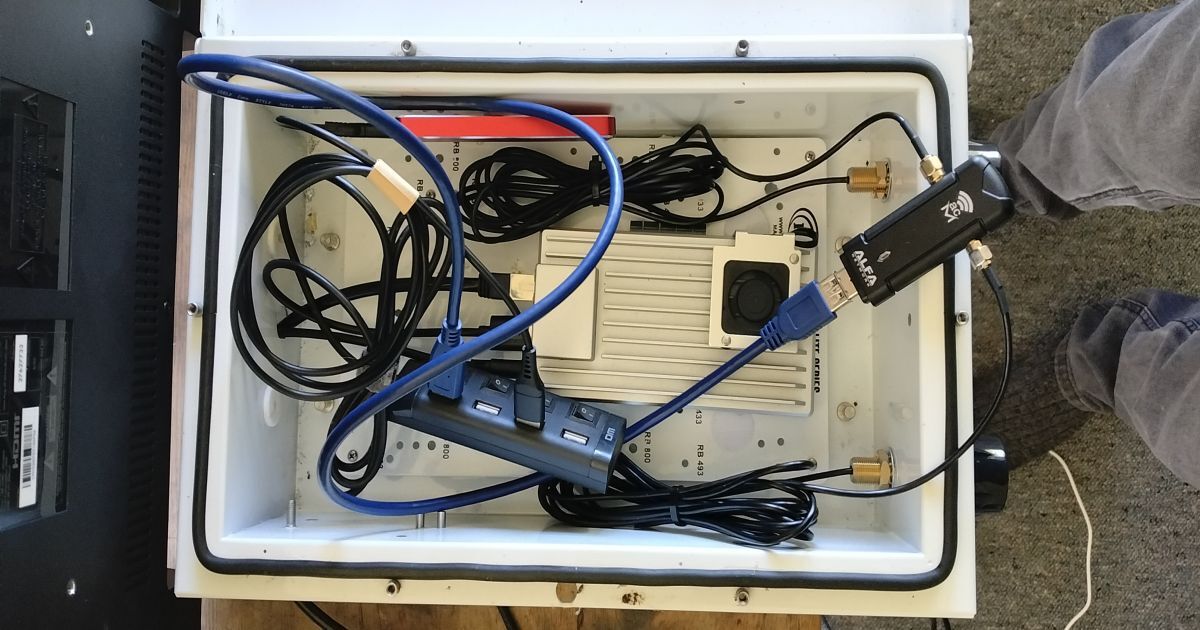
Our Lifeline nodes are now holding a node-to-node mesh connection at around 50 metres.
That’s not yet the range a rural community needs, and we’re not claiming it is. But it’s a solid base, and it tells us the core approach works: small, low-power nodes finding each other and passing traffic along without any internet connection.
Why range matters
In a real emergency, nodes might sit on rooftops, farm sheds, community halls or fence posts. The further each node can reach, the fewer we need, and the easier it is for a community to cover its area without a big investment.
What we’re working on next
- Higher-gain antennas. Our next round of testing will use higher-gain (dBi) antennas to push the range well beyond 50 metres.
- A more robust compute platform. We believe a Raspberry Pi Compute Module 4 (CM4) based unit will give us stronger and more reliable connectivity than our current setup, and we’ll be testing that.
- Connecting more than phones. We’re also exploring a small local server that could let other connected devices, such as sensors, join the network.
We’ll share results as we get them, including the ones that don’t go to plan.
Follow along
If you work in emergency management, run a community group, or want to see Lifeline in your area, get in touch. We’d love to hear from you.