LifeLine
Lifeline is a solar and wind-powered node that creates a local network wherever it’s placed, with no internet, mobile coverage, or grid power required. Link nodes together and a community has its own communications lifeline.
When everything else goes quiet
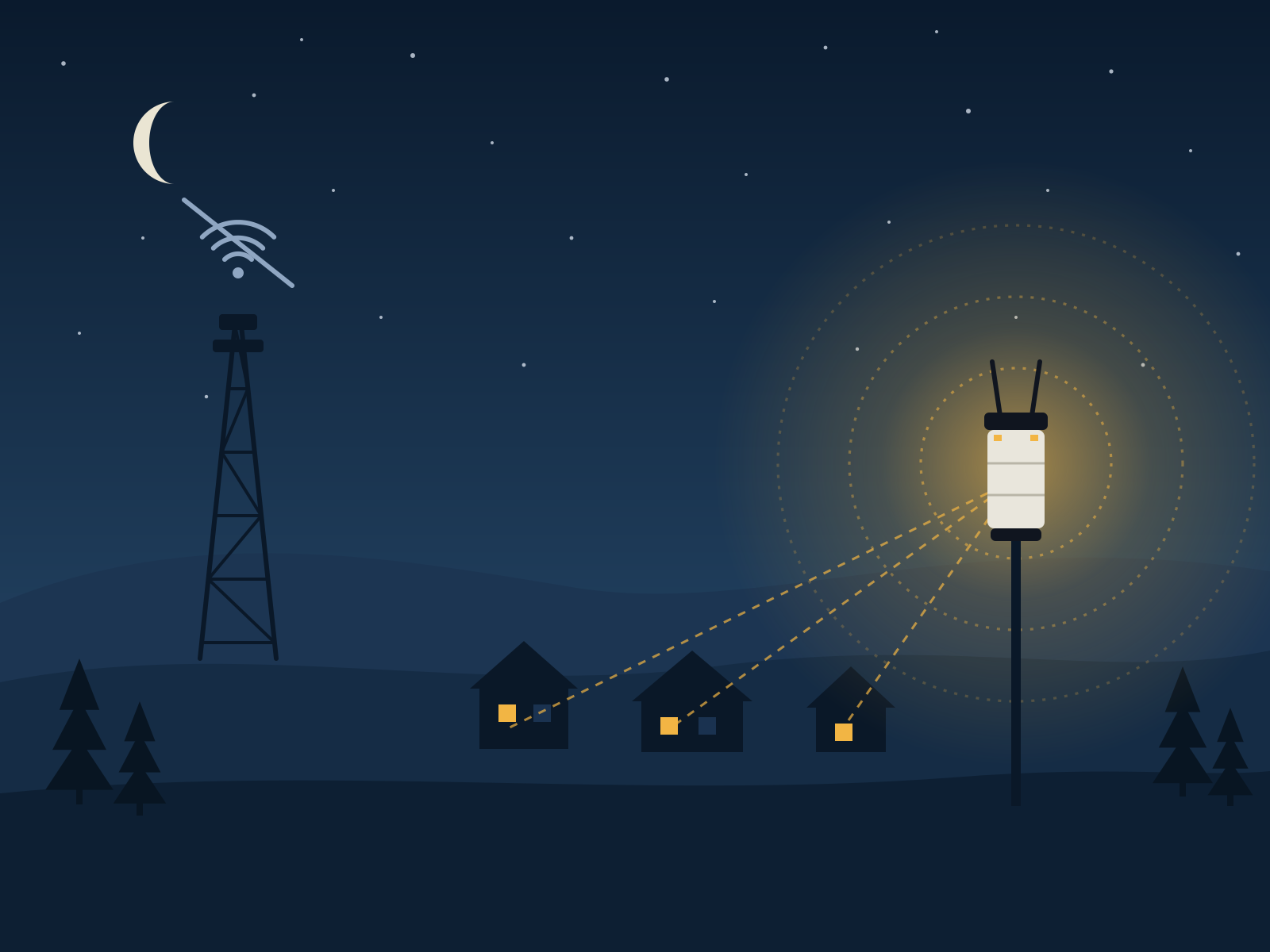
Storms, floods, and earthquakes take out mobile towers and power lines first. Lifeline gives a community a communications network of its own, one that doesn’t depend on the internet, mobile coverage, or the grid.
Designed to keep working
Curved solar panels and an optional vertical-axis wind turbine keep the node running off-grid.
Nodes link with each other to create a local network that covers the community.
The solar shell and modules can be swapped on site without specialist tools.
Install it on an existing pole or set it up on its own.
The tubular design keeps antennae unobstructed at the top for the best reach.
Hosts apps like NeighbourUp so the network is useful from day one.
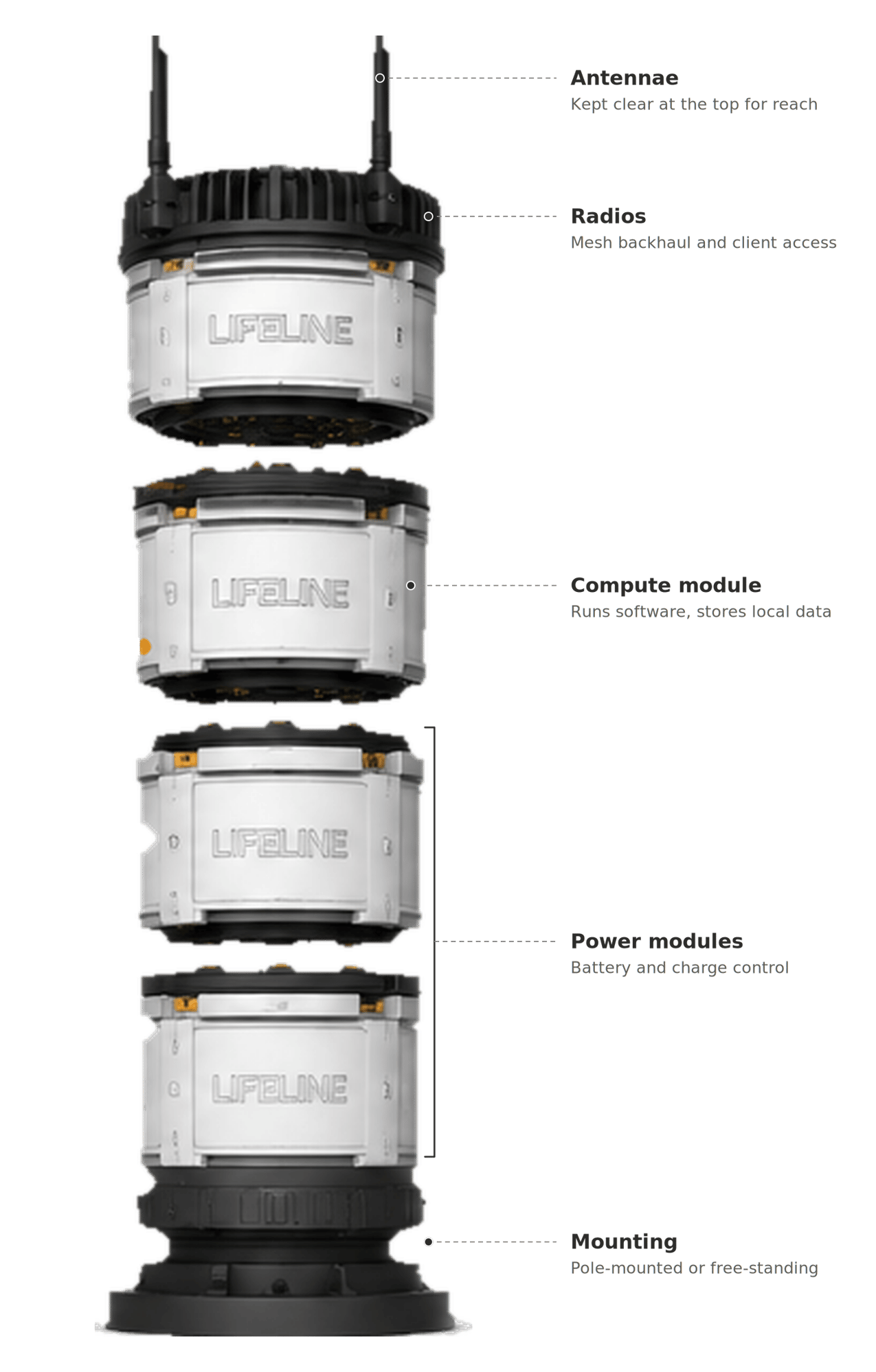
Anatomy of a LifeLine Node
What’s inside Lifeline
- Antennae: mesh backhaul and community Wi-Fi
- Compute module: runs the software and stores local data
- Power module: battery and charge management
- Solar shell: curved panels wrapping the tube, with an air gap for cooling
- Wind turbine (optional): extra generation for low-sun conditions
NB: Concept illustration of the Connectivv Lifeline node. Features, components, and appearance may change as development continues.